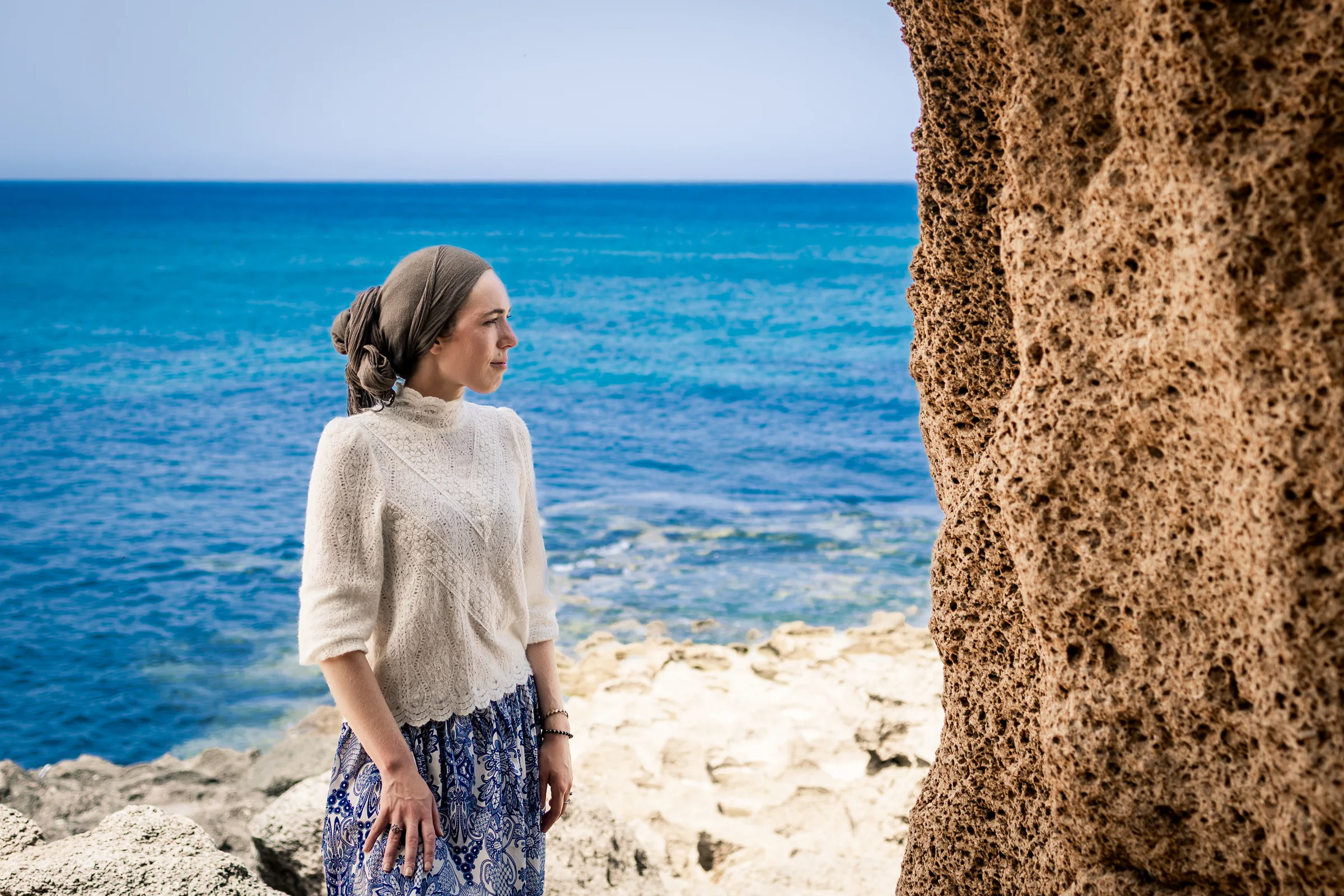
Daphne standing at a coastal threshold with open sea and horizon beyond.
01 / 03Mercy Without PermissionBook in developmentBoek in ontwikkeling

A memoir of care, evidence, and inheritance

Een memoir over zorg, bewijs en erfenis

Mercy Without Permission

I did not discover this story while researching a book.
I grew up inside it.

Ik ontdekte dit verhaal niet tijdens onderzoek voor een boek.
Ik groeide erin op.

01Before the recordVoor het dossier

Some stories begin with a question.
This one began with a house.

Sommige verhalen beginnen met een vraag.
Dit verhaal begon met een huis.

I was twelve when strangers began coming to our home looking for a way out of suffering.

There was no reception desk.

No white corridor.

No sign outside announcing that something unusual was happening behind the front door.

There was our house.

My mother.

The kitchen.

The garden.

A kettle that kept being boiled.

And people arriving carrying lives I was still too young to understand.

Some came exhausted. Some frightened. Some had been through treatment before. Some had families who had run out of ideas. Some seemed to have run out of themselves.

They came for iboga.

I did not yet understand the arguments that would eventually gather around that word.

I knew something simpler.

The doorbell rang.

My mother opened the door.

And after a while, the extraordinary became part of how our house breathed.

Years later, police would walk through that same door.

Cameras would point toward it.

Lawyers would argue about what had happened behind it.

Objects from our home would leave in evidence bags.

My mother's choices would be translated into the language of criminal responsibility.

And I would find myself studying law while watching the law enter my own family.

But before any of that, I was a girl living in a house that had started staying awake at night.

I did not discover this story while researching a book.

I grew up inside it.

ArchiveArchiefDifferent witnessesVerschillende getuigen

Story / Archive

Verhaal / Archief

Same house.
No final camera angle.
Hetzelfde huis.
Geen definitieve camerahoek.

14 records. 14 perspectives.
One history that changes depending on where you stand.
14 dossiers. 14 perspectieven.
Eén geschiedenis die verandert al naargelang waar je staat.

A family story exists in memory. A public story exists in footage, reporting and records. This archive holds both — without pretending they are the same thing.

Een familieverhaal bestaat in herinnering. Een publiek verhaal bestaat in beeldmateriaal, berichtgeving en dossiers. Dit archief bevat beide — zonder te doen alsof het hetzelfde is.

View the archive throughBekijk het archief via

A.01/ 14 Howard Lotsof & Norma (interview) Before iboga became a public controversy, it entered our house as a person.

A filmed interview with Howard Lotsof and Norma, people connected to the wider history of iboga.

Your role:Jouw rol: I met Howard with my father in New York when I was sixteen, during a school day I skipped.

youtu.be Why this is in the archive Waarom dit in het archief staat
A.02/ 14 Iboga Nights (video) Public images of iboga, set against the ordinary work of care inside a home.

A film record of iboga-related stories, people, and nights shaped by the plant's contested history.

Your role:Jouw rol: A witness and family member whose lived experience is part of the story's background.

youtube.com Why this is in the archive Waarom dit in het archief staat
A.03/ 14 Documentary contribution The moment a private reality became something others could view, edit and interpret.

A documentary contribution connected to the family's iboga story and the public record around it.

Your role:Jouw rol: I contributed to the documentary, helping make the family's experience visible from inside the home.

youtube.com Why this is in the archive Waarom dit in het archief staat
A.04/ 14 Media invited into family home The door opened, and the family became footage.

Footage made after I invited media into the family home.

Your role:Jouw rol: I was the person opening the door, asking for a witness to what was happening to my family.

youtu.be Why this is in the archive Waarom dit in het archief staat
A.05/ 14 My Grandfather Survived the Warsaw Ghetto - A Daughter's Powerful Testimony The longer inheritance: what daughters carry from their fathers, their grandfathers, the families who survived.

A daughter's testimony about inherited trauma, family survival, and what it means to grow up inside a family story shaped by historical violence.

Your role:Jouw rol: Daughter who inherits multiple legacies: my father's inherited trauma, my mother's choices in response to suffering.

youtube.com 2023 Why this is in the archive Waarom dit in het archief staat
A.06/ 14 My Iboga Story The version I told then: the daughter enters the public record herself.

A first-person public article written in 2020, combining family memory, advocacy, documentary material and earlier research before Mercy Without Permission.

Your role:Jouw rol: Author, daughter and advocate entering the public record herself.

Historical viewpoint · self-authored · not current medical guidanceHistorisch perspectief · zelf geschreven · geen actuele medische richtlijn linkedin.com 2020 Why this is in the archive Waarom dit in het archief staat
A.07/ 14 Iboga Therapy in the Netherlands - Part 1 (2002) The foundation: iboga therapy before it became evidence.

Early documentary exploring iboga therapy practice in the Netherlands in 2002, capturing the landscape before the legal crackdown.

Your role:Jouw rol: Witness and child growing up inside this world, though not yet understanding its full significance.

youtu.be 2002 Why this is in the archive Waarom dit in het archief staat
A.08/ 14 Iboga Therapy in the Netherlands - Part 2 (2002) The ongoing practice that defined my childhood.

Continuation of the 2002 documentary exploration, deepening the context of therapeutic practice.

Your role:Jouw rol: Witness and child present in this world.

youtu.be 2002 Why this is in the archive Waarom dit in het archief staat
A.09/ 14 Iboga Therapy in the Netherlands - Part 3 (2002) The complete picture of a world that would soon be dismantled.

Completion of the 2002 documentary series on iboga therapy in the Netherlands.

Your role:Jouw rol: Witness and child present throughout this period.

youtu.be 2002 Why this is in the archive Waarom dit in het archief staat
A.10/ 14 Keeper of the Root: Sara Glatt on Iboga, Healing, and the Sacred Path The root keeper speaks: what she believed she was doing.

Extended interview with my mother exploring her understanding of iboga as spiritual practice, healing modality, and the consequences of that choice.

Your role:Jouw rol: Daughter listening to my mother articulate the philosophy that guided her choices.

youtu.be 2023 Why this is in the archive Waarom dit in het archief staat
A.11/ 14 Trippende Olifanten — De Ondergrond The questions that led to writing this book.

A 2023 episode of the Dutch podcast De Ondergrond in which Sam follows a story about elephants and the iboga root, and arrives at the woman being sought by the Dutch Public Prosecution Service.

Your role:Jouw rol: I speak as the daughter, writer, and person reconstructing the history while the podcast places my mother's work inside a wider investigation.

open.spotify.com 2023 Why this is in the archive Waarom dit in het archief staat
A.12/ 14 The Woman Behind the Medicine: Sara Glatt on the Healing Power of Iboga The healer speaks: motivation, belief, and consequence.

Interview exploring my mother's work with iboga and her understanding of healing, captured in 2025.

Your role:Jouw rol: Daughter listening to the woman who shaped this story explain her choices.

youtube.com 2025 Why this is in the archive Waarom dit in het archief staat
A.13/ 14 International Women's Day - Conversation with Jan de Zwarte A public reckoning: daughters, mothers, and inherited courage.

Public conversation on International Women's Day 2025 exploring themes of courage, responsibility, and women's lives under pressure.

Your role:Jouw rol: I speak about the inheritance of difficult choices and what it means to tell a complicated truth about a complicated woman.

youtube.com 2025 Why this is in the archive Waarom dit in het archief staat
A.14/ 14 Economic Botany: Tabernanthe Iboga Written while the story in this book was still my ordinary life.

A 19-page university paper on iboga: taxonomy, cultivation, traditional use in West Africa, the alkaloid ibogaine, legal status across jurisdictions, therapeutic use, and controversy.

Your role:Jouw rol: Co-author, writing the legal chapter, years before any of this became a memoir.

PDF · 19 pages 2013 Why this is in the archive Waarom dit in het archief staat

The thread — a source is not the event. It is one representation of it.

De draad — een bron is niet de gebeurtenis. Het is één weergave ervan.

  1. Before the record A.14
  2. 01 THE DOOR DIDN'T STOP
  3. 02 SIXTEEN A.01
  4. 03 THE HOUSE STAYED AWAKE A.02
  5. 04 THE CAMERA CAME THROUGH THE DOOR A.03A.04
  6. 05 THE DAY HOME BECAME EVIDENCE
  7. 06 WHEN A PERSON BECOMES A FILE A.05
  8. 07 WHAT THE CAMERA COULD NOT HOLD A.06
  9. 08 THE ROOT A.07A.08A.09A.10
  10. 09 2023 A.11A.12A.13
  11. 10 WHAT MERCY WITHOUT PERMISSION IS
  12. 11 THE ARCHIVE REMEMBERS DIFFERENTLY
  13. 12 RETURNING TO MOLENZICHT

The full records

De volledige dossiers

Archive item A.01 of 14Archiefstuk A.01 van 14

Howard Lotsof & Norma (interview)

memoryyoutu.beChapter 02Hoofdstuk 02

The record
Het dossier

A filmed interview with Howard Lotsof and Norma, people connected to the wider history of iboga.

Daphne's position in the record
Daphnes positie in het dossier

I met Howard with my father in New York when I was sixteen, during a school day I skipped.

Why it matters
Waarom het ertoe doet

The meeting changed the scale of the story: what had felt like a private family world was connected to a much larger history.

How it connects
Hoe het samenhangt

It gives readers a human point of entry before the later archive, media, and legal record.

Watch the original Bekijk het origineel

Archive item A.02 of 14Archiefstuk A.02 van 14

Iboga Nights (video)

videoyoutube.comChapter 03Hoofdstuk 03

The record
Het dossier

A film record of iboga-related stories, people, and nights shaped by the plant's contested history.

Daphne's position in the record
Daphnes positie in het dossier

A witness and family member whose lived experience is part of the story's background.

Why it matters
Waarom het ertoe doet

It shows the distance between public images of iboga and the ordinary, difficult work of care inside a home.

How it connects
Hoe het samenhangt

Watch it as an archive companion to the chapter about waiting, vulnerability, responsibility, and morning.

Watch the original Bekijk het origineel

Archive item A.03 of 14Archiefstuk A.03 van 14

Documentary contribution

documentaryyoutube.comChapter 04Hoofdstuk 04

The record
Het dossier

A documentary contribution connected to the family's iboga story and the public record around it.

Daphne's position in the record
Daphnes positie in het dossier

I contributed to the documentary, helping make the family's experience visible from inside the home.

Why it matters
Waarom het ertoe doet

The film captures the moment a private family reality became something that could be viewed, edited, and interpreted by others.

How it connects
Hoe het samenhangt

It sits at the turning point where the house shifts from sanctuary to public archive.

Watch the original Bekijk het origineel

Archive item A.04 of 14Archiefstuk A.04 van 14

Media invited into family home

mediayoutu.beChapter 04Hoofdstuk 04

The record
Het dossier

Footage made after I invited media into the family home.

Daphne's position in the record
Daphnes positie in het dossier

I was the person opening the door, asking for a witness to what was happening to my family.

Why it matters
Waarom het ertoe doet

I hoped visibility might correct a public story that no longer resembled the life I knew.

How it connects
Hoe het samenhangt

The footage shows both the protection and the cost of turning lived experience into evidence.

Watch the original Bekijk het origineel

Archive item A.05 of 14Archiefstuk A.05 van 14

My Grandfather Survived the Warsaw Ghetto - A Daughter's Powerful Testimony

testimonyyoutube.com2023Chapter 06Hoofdstuk 06

The record
Het dossier

A daughter's testimony about inherited trauma, family survival, and what it means to grow up inside a family story shaped by historical violence.

Daphne's position in the record
Daphnes positie in het dossier

Daughter who inherits multiple legacies: my father's inherited trauma, my mother's choices in response to suffering.

Why it matters
Waarom het ertoe doet

The archive includes other people's histories and inheritances because my story is not isolated. It is one house, one family, inside a much longer history of survival, trauma, care, and consequence.

Watch the original Bekijk het origineel

Archive item A.06 of 14Archiefstuk A.06 van 14

My Iboga Story

recordlinkedin.com2020Chapter 07Hoofdstuk 07

The record
Het dossier

A first-person public article written in 2020, combining family memory, advocacy, documentary material and earlier research before Mercy Without Permission.

Daphne's position in the record
Daphnes positie in het dossier

Author, daughter and advocate entering the public record herself.

Provenance
Herkomst

Historical viewpoint · self-authored public record · not current medical guidance.

Historisch perspectief · zelf geschreven publiek dossier · geen actuele medische richtlijn.

What I understood then
Wat ik toen begreep

I wanted people to understand my mother before they judged her. I gave intention and the positive experiences I had witnessed significant weight because I was writing from inside an unfinished story.

What I understand now
Wat ik nu begrijp

I recognize the daughter who wrote it completely, and I also see certainty where I now have questions. The court file, documentaries, headlines and my own advocacy are all partial records.

Why it matters
Waarom het ertoe doet

This is the version of the story I told when I was still trying to defend, explain and correct the public record before my understanding had fully changed.

How it connects
Hoe het samenhangt

Read it as a historical viewpoint and self-authored public record, not as current medical guidance. The article preserves what I believed needed defending then; it does not replace the more nuanced account I am making now.

Watch the original Bekijk het origineel

Archive item A.07 of 14Archiefstuk A.07 van 14

Iboga Therapy in the Netherlands - Part 1 (2002)

filmyoutu.be2002Chapter 08Hoofdstuk 08

The record
Het dossier

Early documentary exploring iboga therapy practice in the Netherlands in 2002, capturing the landscape before the legal crackdown.

Daphne's position in the record
Daphnes positie in het dossier

Witness and child growing up inside this world, though not yet understanding its full significance.

Why it matters
Waarom het ertoe doet

Primary documentation of the therapeutic context that shaped my childhood and the practices at the center of the legal case.

Watch the original Bekijk het origineel

Archive item A.08 of 14Archiefstuk A.08 van 14

Iboga Therapy in the Netherlands - Part 2 (2002)

filmyoutu.be2002Chapter 08Hoofdstuk 08

The record
Het dossier

Continuation of the 2002 documentary exploration, deepening the context of therapeutic practice.

Daphne's position in the record
Daphnes positie in het dossier

Witness and child present in this world.

Why it matters
Waarom het ertoe doet

Establishes the legitimate therapeutic context that later became criminal evidence.

Watch the original Bekijk het origineel

Archive item A.09 of 14Archiefstuk A.09 van 14

Iboga Therapy in the Netherlands - Part 3 (2002)

filmyoutu.be2002Chapter 08Hoofdstuk 08

The record
Het dossier

Completion of the 2002 documentary series on iboga therapy in the Netherlands.

Daphne's position in the record
Daphnes positie in het dossier

Witness and child present throughout this period.

Why it matters
Waarom het ertoe doet

Essential context for understanding what the house was before it became a crime scene.

Watch the original Bekijk het origineel

Archive item A.10 of 14Archiefstuk A.10 van 14

Keeper of the Root: Sara Glatt on Iboga, Healing, and the Sacred Path

audioyoutu.be2023Chapter 08Hoofdstuk 08

The record
Het dossier

Extended interview with my mother exploring her understanding of iboga as spiritual practice, healing modality, and the consequences of that choice.

Daphne's position in the record
Daphnes positie in het dossier

Daughter listening to my mother articulate the philosophy that guided her choices.

Why it matters
Waarom het ertoe doet

Gives voice to the motivations and beliefs that shaped the house and my upbringing, in her own words.

Watch the original Bekijk het origineel

Archive item A.11 of 14Archiefstuk A.11 van 14

Trippende Olifanten — De Ondergrond

audioopen.spotify.com2023Chapter 09Hoofdstuk 09

The record
Het dossier

A 2023 episode of the Dutch podcast De Ondergrond in which Sam follows a story about elephants and the iboga root, and arrives at the woman being sought by the Dutch Public Prosecution Service.

Daphne's position in the record
Daphnes positie in het dossier

I speak as the daughter, writer, and person reconstructing the history while the podcast places my mother's work inside a wider investigation.

Why it matters
Waarom het ertoe doet

The episode offers an external audio perspective on the public controversy around iboga and the family home, while opening questions that led me to begin writing Mercy Without Permission.

How it connects
Hoe het samenhangt

Listen alongside the final act: a journalist's investigation meeting family memory, and experience becoming a book.

Watch the original Bekijk het origineel

Archive item A.12 of 14Archiefstuk A.12 van 14

The Woman Behind the Medicine: Sara Glatt on the Healing Power of Iboga

audioyoutube.com2025Chapter 09Hoofdstuk 09

The record
Het dossier

Interview exploring my mother's work with iboga and her understanding of healing, captured in 2025.

Daphne's position in the record
Daphnes positie in het dossier

Daughter listening to the woman who shaped this story explain her choices.

Why it matters
Waarom het ertoe doet

Allows readers to hear directly from the central figure, understanding her beliefs and philosophy in her own voice.

Watch the original Bekijk het origineel

Archive item A.13 of 14Archiefstuk A.13 van 14

International Women's Day - Conversation with Jan de Zwarte

audioyoutube.com2025Chapter 09Hoofdstuk 09

The record
Het dossier

Public conversation on International Women's Day 2025 exploring themes of courage, responsibility, and women's lives under pressure.

Daphne's position in the record
Daphnes positie in het dossier

I speak about the inheritance of difficult choices and what it means to tell a complicated truth about a complicated woman.

Why it matters
Waarom het ertoe doet

Contextualizes the book within broader conversations about power, care, law, and what daughters inherit from their mothers.

Watch the original Bekijk het origineel

Archive item A.14 of 14Archiefstuk A.14 van 14

Economic Botany: Tabernanthe Iboga

researchPDF · 19 pages2013

The record
Het dossier

A 19-page university paper on iboga: taxonomy, cultivation, traditional use in West Africa, the alkaloid ibogaine, legal status across jurisdictions, therapeutic use, and controversy.

Daphne's position in the record
Daphnes positie in het dossier

Co-author, writing the legal chapter, years before any of this became a memoir.

Why it matters
Waarom het ertoe doet

It shows the research foundation beneath the personal story, and the language I was already reaching for before I could write about this as my own life.

How it connects
Hoe het samenhangt

Read it as a document of its moment rather than as current guidance. It is a student paper from 2013: the law has moved since, and so has the clinical evidence.

Open the paper Open het document

An archive cannot tell you what to believe.
It can show you what survived.

Een archief kan je niet vertellen wat je moet geloven.
Het kan je laten zien wat overleefde.

Act I

The Door

What I lived.

Bedrijf I

De Deur

Wat ik beleefde.

01The Door

door / 01

THE DOOR DIDN'T STOP

Before it became controversial, it was domestic.

At twelve, you do not think in categories like sanctioned care and underground medicine.

You think in rooms.

This room is mine.

That room belongs to my mother.

Someone is sleeping upstairs.

Do not make too much noise.

Someone needs tea.

Someone has been awake all night.

Something serious is happening, although the adults are not explaining all of it.

Molenzicht began changing by accumulation.

One person.

Then another.

Another telephone call.

Another story arriving at our table.

Need has a way of rearranging a house.

A spare room stops being spare.

A kitchen becomes a place for whispered decisions.

Night loses its boundary.

A family learns to recognise sounds it never expected to know.

My mother learned to hold people through hours that did not behave like ordinary hours.

I learned the atmosphere around that holding.

Coffee.

Sweat.

Incense.

Long silence.

A blood-pressure machine already running while someone whispered a prayer nearby.

Sometimes laughter returned to the house.

Sometimes somebody left lighter.

Sometimes somebody relapsed.

Sometimes the story did not end safely.

That belongs here too.

Because I will not turn our house into a shrine simply because other people later turned it into a crime scene.

Both versions are too easy.

My mother was not a symbol.

She was my mother.

A woman with an enormous capacity to stay when other people left, and an equally enormous difficulty knowing when staying had become too much.

As a child, I did not know those things could live in the same person.

I would spend years learning that they can.

Molenzichtfamily photographsobjects from the house
02The Door

door / 02

SIXTEEN

Then history walked into the room.

At sixteen, I met Howard Lotsof and his wife Norma in New York.

I was there with my father.

I skipped school for the visit.

I did not meet Howard as a footnote.

I met him in a city, beside my father, in the middle of an ordinary school day made suddenly extraordinary.

That distinction matters to me now.

Adults looking backward like to organise history into movements, pioneers, advocates, controversies and dates.

Teenagers meet a person.

A face.

A voice.

A strange sense that the private world surrounding their family is connected to something much larger than the family itself.

Until then, iboga belonged partly to the architecture of our house.

To my mother's work.

To visitors.

To telephone calls.

To nights that ran into mornings.

Meeting Howard altered the scale of it.

There was a before us.

There were people elsewhere asking the same questions.

There was a history moving underneath what I had mistaken for something almost private.

I could not have understood then where that history would carry us.

At sixteen, history rarely tells you that it is history.

It sits across from you.

It speaks.

Someone pours another cup.

Years later, you understand who was in the room.

I met the person before I understood the legend.

That is how most of the important things in my life have arrived.

Without captions.

Howard Lotsof
03The Door

root / 03

THE HOUSE STAYED AWAKE

There is nothing cinematic about waiting for morning.

Iboga would later acquire all kinds of imagery around it.

Mysticism.

Controversy.

Transformation.

Danger.

Hope.

But my memories are less polished.

Time is one of them.

The length of a night when somebody is vulnerable.

The strange concentration of adults trying not to miss something important.

The difference between ordinary quiet and the quiet in which everyone is listening.

My mother stayed close.

That was one of her gifts.

It was also one of the forces that would eventually consume more of her life than any of us understood.

People shook.

Sweated.

Cried.

Remembered.

Waited.

Some confronted lives they had spent years trying not to feel.

Some found something they called release.

Some went back to the lives they had come from and struggled again.

There were mornings when the only fact that mattered was that everybody was still breathing.

That sentence is less romantic than transformation.

It is also closer to what care actually felt like from inside the house.

No halo.

No clean miracle.

No guarantee.

Just another human being still here when daylight arrived.

And a family learning, night by night, how much responsibility can fit inside a word like mercy.

Iboga nights
04The Door

record / 04

THE CAMERA CAME THROUGH THE DOOR

We wanted a witness.

Before I understood how easily a camera can turn a life into a frame, I believed being seen might protect us.

If something mattered, show it.

If the public story was wrong, let somebody come inside.

If people were going to speak about our family, perhaps they should first see the rooms.

So cameras entered the house.

Filmmakers came.

Journalists came.

The private world began becoming an archive.

There is something unsettling about watching footage of a place you remember from inside your own body.

A room I knew through temperature becomes an establishing shot.

A person I knew through habit becomes a character.

A silence I remember living through becomes an edit.

The house stops belonging only to memory.

Somebody else can pause it.

Rewind it.

Crop it.

Name it.

For years I thought the great danger was being misunderstood by hostile eyes.

Later I learned something more complicated.

Even sympathetic eyes frame.

Even love chooses what fits inside the shot.

There are parts of my past I can revisit today because somebody else happened to be holding a camera.

I am grateful for that.

I am unsettled by it too.

Both things are true.

They will remain true.

Ibogaine, Rite of Passagefamily home footage
Home had changed jurisdiction.Thuis was van jurisdictie veranderd.
Act II

The Record

What the world made of it.

Bedrijf II

Het Dossier

Wat de wereld ervan maakte.

05The Record

record / 05

THE DAY HOME BECAME EVIDENCE

THE HOUSE BECAME EVIDENCE.

By the time my mother came through the door that afternoon, the camera was already rolling.

I had called the filmmaker.

Headlines had begun using words for our life that did not resemble the life I knew.

I understood enough by then to know that once language hardens around somebody, it can become more durable than the person.

I wanted a witness.

My mother had been arrested.

Questioned.

Then released.

She had been sent home on foot.

She walked the last kilometres in the rain.

When she appeared in the doorway, her hair was wet and her coat was dripping onto the tiles.

For a second, she looked toward the camera.

There was almost a smile.

The reflexive Dutch politeness of somebody who has spent a lifetime knowing how to receive whoever is standing in front of her.

Then the smile disappeared.

The lens stayed between us.

I stood just beside it.

There are moments when your relationship with your mother changes without either of you agreeing that it has changed.

This was one of mine.

I was no longer simply the daughter watching adults make impossible decisions.

I was beginning to defend.

To document.

To remember wording.

To notice what was being written.

To understand that an official record does not merely describe a life.

It can replace one.

That same period, I was travelling to law school in Leiden.

By day I learned due process.

At home I watched legal language spread across our kitchen table.

The distance between theory and family became one train journey.

Later, the house itself was searched.

They came for objects.

For paper.

For words that could be removed from the place where they had meant one thing and made to mean another somewhere else.

The guestbook went with them.

A book containing names of human beings who had crossed our threshold became an object inside a case.

Police boots left mud on the floorboards.

Otto pulled against my mother's hand.

The garden remained absurdly alive.

Mint kept spreading.

Bruised basil released its smell.

The kettle clicked as it cooled.

And after the cars finally disappeared down the road, my mother stood inside the same house with empty hands.

That is the image I return to.

Not because it proves she was right.

Not because it proves the state was wrong.

Because both of those conclusions are smaller than what I remember.

I remember what happened when a sanctuary became searchable terrain.

I remember the moment our private grammar stopped belonging to us.

The house was still standing.

Home had changed jurisdiction.

06The Record

record / 06

WHEN A PERSON BECOMES A FILE

The vocabulary changed first.

Our visitors became cases.

Care became conduct.

Risk became something that could be assigned.

The house became a location.

My mother's work became charges and allegations.

Human mess became prose designed to survive a courtroom.

This is not a criticism of the need for law.

I studied law.

I know why records matter.

I know why responsibility matters.

I also know what a record cannot smell.

It cannot reproduce coffee and sweat and incense.

It cannot hear the late-night laughter.

It does not know how long a silence lasted before somebody began crying.

It cannot feel my mother's hand on a frightened person.

It cannot tell you how tightly she sometimes held on.

It cannot tell you what that holding eventually cost her children.

The law has to compress.

A judgment cannot contain a whole house.

A charge cannot contain a mother.

An acquittal cannot repair a childhood.

A sentence cannot explain love.

That is partly why I am writing.

Not to replace one official version with one flattering family version.

To put back what compression removed.

Texture.

Contradiction.

Bodies.

Rooms.

The difference between intention and consequence.

The dangerous distance between wanting desperately to save somebody and actually being able to keep them safe.

My Grandfather Survived the Warsaw Ghetto - A Daughter's Powerful Testimony
A court file can establish what happened. It cannot tell you what it felt like to live upstairs.
Een dossier kan vaststellen wat er gebeurde. Het kan je niet vertellen hoe het voelde om boven te wonen.
07The Record

record / 07

WHAT THE CAMERA COULD NOT HOLD

There is another story underneath the legal one.

It is less public.

More expensive.

What happens to the daughter?

What happens when defending your mother begins becoming part of loving her?

When does loyalty become a job?

When does witness become responsibility?

When do you discover that someone can be brave, loving, stubborn, wrong, wounded and magnificent without those qualities cancelling one another out?

For years I wanted cleaner categories.

They are easier to survive.

Hero. Victim. Healer. Criminal. Mother. Daughter. Law. Mercy.

But our life would not remain inside any of them.

My mother risked enormous amounts to stay beside human beings other places had failed to hold.

That mattered.

Some people were helped.

That mattered.

Some were not.

That mattered.

Some were harmed.

That mattered.

My mother's choices had consequences for her.

They had consequences for us.

That matters too.

Love does not become honest because you remove the difficult evidence.

Love becomes honest when you stop removing it.

That is one of the hardest debts this book pays.

My Iboga Story
Love becomes honest when you stop removing the difficult evidence.Liefde wordt eerlijk zodra je stopt met het weglaten van het moeilijke bewijs.
Act III

The Root

What I am making of it now.

Bedrijf III

De Wortel

Wat ik er nu van maak.

08The Root

root / 08

THE ROOT

Iboga does not belong to my family.

That matters.

Long before it reached a Dutch family home, iboga had histories, custodians, spiritual contexts and relationships to land that were not ours.

I am not a Bwiti elder.

I am not a doctor.

I am not a spokesperson for a tradition whose depth cannot be reduced to the chapter of it that entered my childhood.

The root reached our house already carrying histories of encounter, extraction, belief, trade and longing.

I do not resolve those contradictions by calling what happened "healing."

Nor do I erase everything we witnessed because the story later became dangerous.

In this book, iboga is not a cure claim.

It is not a lifestyle object.

It is not psychedelic decoration.

It is part of the inheritance.

A root that entered a particular house.

Met a particular woman.

Met particular bodies.

Met a particular legal system.

And changed the course of my family.

That is the story I am qualified to tell.

Iboga Therapy in the Netherlands - Part 1 (2002)Iboga Therapy in the Netherlands - Part 2 (2002)Iboga Therapy in the Netherlands - Part 3 (2002)Keeper of the Root: Sara Glatt on Iboga, Healing, and the Sacred Path
09The Root

door / 09

2023

I started writing.

Not because the story had ended.

Because I finally understood that it had not.

For years other forms had held pieces of it.

Film. News. Police records. Court documents. Family stories. Arguments. Silences. Search results. Memory.

Each one preserved something.

Each one lost something.

By 2023, I was no longer the twelve-year-old listening to footsteps in the house.

I was no longer the sixteen-year-old meeting people whose significance I would understand only later.

I was no longer only the daughter standing beside a camera while her mother came home through the rain.

I had become a writer. A lawyer. A woman old enough to ask questions that the child inside that house could not have formulated.

Not: Was my mother good?

Not: Was iboga good?

Not: Was the system evil?

Those questions collapse too quickly.

The questions that stayed were more difficult.

What does it cost to hold people everybody else has stopped holding?

What happens when care outruns the structures capable of making it safe?

When does compassion become complicity?

Who carries the consequences of somebody else's mercy?

How do you love a mother whose courage you inherited without inheriting every consequence of her courage?

And perhaps the hardest: can I tell the truth about what happened without either abandoning her or disappearing inside her story?

That is the book.

Podcast interviewThe Woman Behind the Medicine: Sara GlattInternational Women's Day - Conversation with Jan de Zwarte
10The Root

root / 10

WHAT MERCY WITHOUT PERMISSION IS

This is not a case for iboga.

It is not a case against it.

It is not medical advice.

It is not a treatment guide.

It will not tell you how to dose, source, administer or supervise iboga.

It is not an argument that good intentions remove responsibility.

They do not.

And it is not a story in which the state arrives wearing a black hat so that my family can remain innocent.

That story would be easier to write.

It would also be false.

Mercy Without Permission is a daughter walking back into the rooms where her moral imagination was formed and asking what those rooms actually taught her.

About care. About danger. About devotion. About law. About responsibility.

About mothers who refuse to stop holding on.

About daughters who eventually must.

11The Root

record / 11

THE ARCHIVE REMEMBERS DIFFERENTLY

A film remembers one version.

A court judgment remembers another.

A newspaper headline remembers what fit above the fold.

A police file remembers what somebody thought might matter later.

A family remembers through arguments, absences, jokes, objects and things nobody can agree happened exactly that way.

A daughter remembers differently depending on when you ask her.

A body remembers without footnotes.

That is why this page will hold all of them.

Not as proof that my memory wins.

As evidence that no single archive does.

Different witnesses.

Same house.

No final camera angle.

The filmThe family footageThe court recordThe podcastThe photographsThe objectsThe daughter
12The Root

door / 12

RETURNING TO MOLENZICHT

There are houses that disappear when you leave them.

And houses you carry anatomically.

Molenzicht is the second kind for me.

I can still return through objects.

Through footage.

Through the shape of a doorway.

Through the garden.

Through a kettle finishing its boil.

Through the language in a file.

Through the memory of people who arrived because something in them still wanted to live.

I return differently now.

I no longer believe mercy means keeping every door open.

I no longer believe loving someone requires defending every choice they made.

I do not need to make my mother innocent to love her.

I do not need to make the state monstrous to name what its machinery did to us.

I do not need to call every outcome healing to honour the people who came looking for it.

And I will not turn the dead into scenery for a beautiful story.

They deserve more than that.

So does my mother. So do I.

Mercy Without Permission began in a house long before it became a manuscript.

Now I am returning to that house through memory, archive, law and the people who survived it.

The official record still contains the words they used for us.

The house contains other words.

I am opening the door one more time.

Come inside before you decide what it was.

Mercy / 2023—Now
Mercy / 2023—Nu

The Root

De Wortel

In 2023,
I started writing.

In 2023,
begon ik te schrijven.

Not to settle the history. To understand what care asks of us when love, risk, responsibility, and consequence occupy the same room.

Niet om de geschiedenis te beslechten. Om te begrijpen wat zorg van ons vraagt wanneer liefde, risico, verantwoordelijkheid en gevolg dezelfde ruimte delen.